Columnar activated carbon: efficient adsorption material in the field of air purification
Columnar activated carbon is made from high-quality coconut shells, sawdust or coal raw materials, which are crushed, screened and impurities removed. It is an important adsorption material in environmental protection. This article explains in detail the impact of columnar activated carbon on environmental improvement from the aspects of its production process and application scenarios.
As an important adsorption material in industrial production, environmental protection and daily life, columnar activated carbon has become the first choice for many industries to solve pollution control and purification problems due to its unique physical structure and excellent adsorption performance.
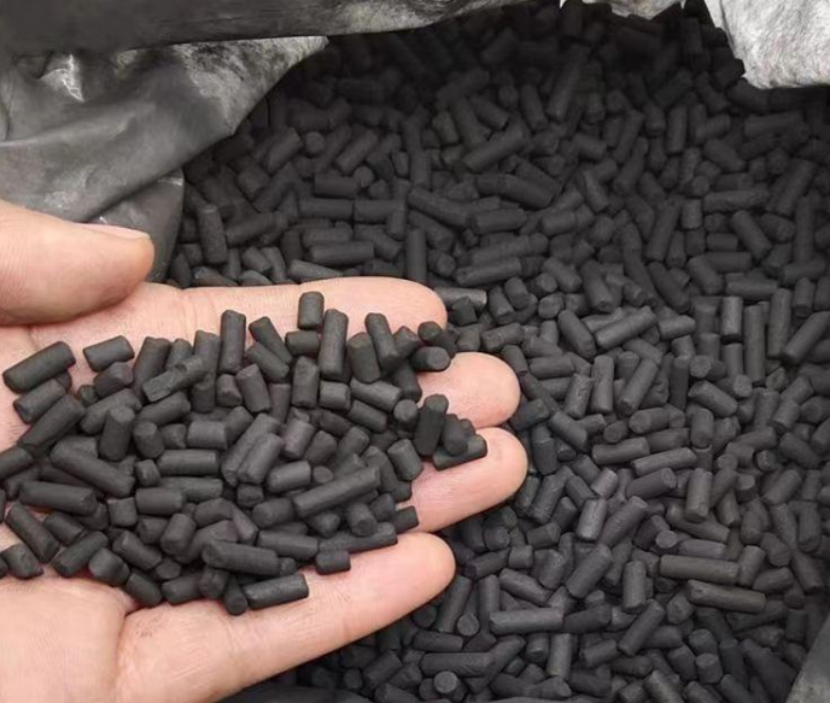
Production process of columnar activated carbon:
Raw material screening and pretreatment
Use high-quality coconut shells, sawdust or coal raw materials, remove impurities after crushing and screening to ensure the purity of raw materials.
Carbonization and activation
The raw materials are carbonized in an oxygen-deficient environment at high temperature (600~900℃) to form a carbon skeleton, and then activated by water vapor or chemical reagents to expand the pore structure and increase the specific surface area (usually up to 800~1200㎡/g).
Molding process
The activated carbon block is ground into powder, the carbon powder is mixed with an environmentally friendly binder, and extruded into cylindrical particles with a diameter of 1.5~8mm by high pressure, which has both high mechanical strength and uniform pore distribution.
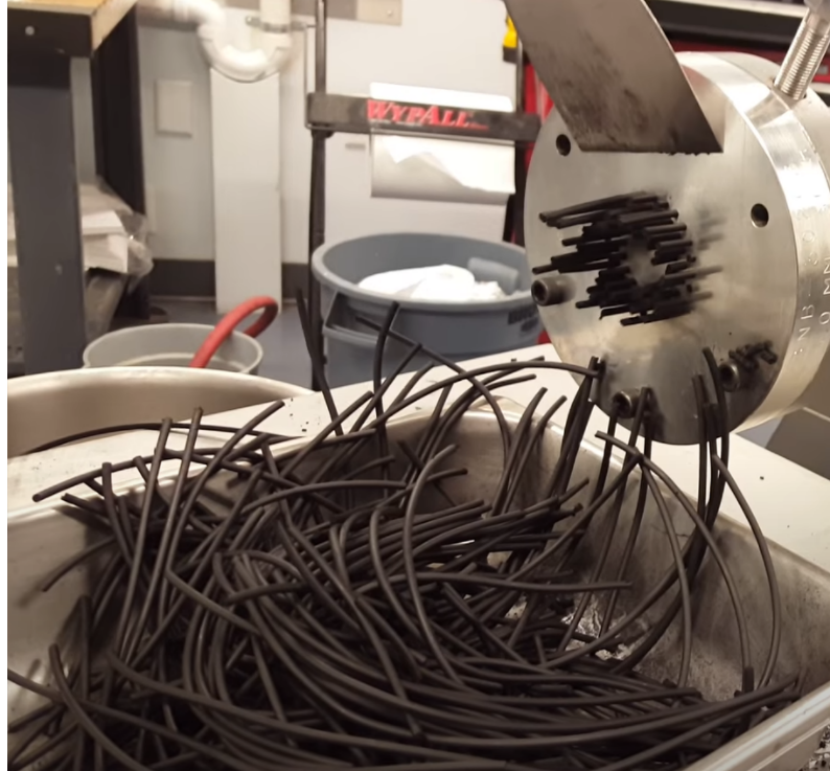
Drying and quality inspection
The water is removed by low-temperature drying, and the iodine value, strength, ash content and other indicators are tested and graded and packaged.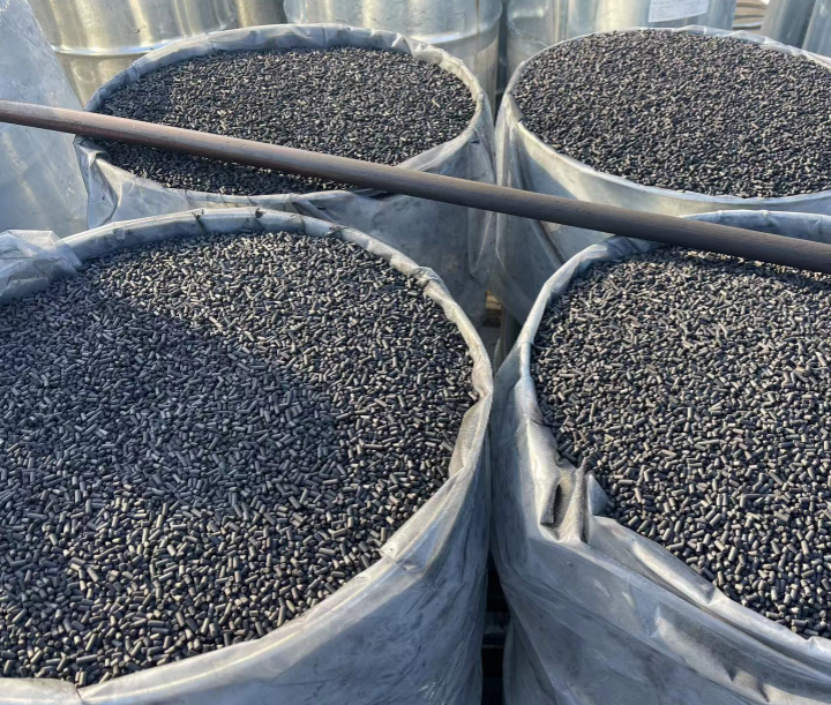
II. Wide application fields of columnar activated carbon
With high adsorption capacity, pressure resistance, wear resistance and long service life, columnar activated carbon performs well in the following scenarios:
Industrial waste gas and air purification
VOCs treatment: adsorption of harmful gases such as benzene and formaldehyde emitted by the chemical and printing industries.
Equipment selection:
Use a fixed bed adsorption tower (vertical or horizontal), the material must be corrosion-resistant (such as 304 stainless steel or fiberglass), and a uniform gas distribution device is set in the tower to avoid short-circuiting of air flow.
Filling parameters:
Empty tower gas velocity: generally controlled at 0.2~0.5 m/s. Too high will lead to a decrease in adsorption efficiency, and too low will increase the volume of the equipment.
Filling height: single-layer filling height is 1~2 meters, and multi-layer series connection can improve treatment efficiency.
Activated carbon specifications: Select columnar carbon with a diameter of 3~4mm and an iodine value ≥800mg/g. The pores are mainly mesopores (pore size 2~50nm), which are suitable for the molecular size of VOCs.
The temperature of VOC waste gas should be lower than 40℃. High temperature (>50℃) will significantly reduce the adsorption capacity, and a cooling device (such as a spray tower) needs to be added.
The relative humidity of VOC gas is recommended to be controlled at 40%~60%. When the humidity is too high (>80%), water molecules compete with VOCs for adsorption, and a dehumidification device needs to be installed.
Applicable VOCs concentration range: 100~2000 mg/m³ (high concentration requires a concentration wheel or catalytic combustion).
The processing air volume has a wide adaptability, and a single tower can treat 1000~50000 m³/h of waste gas. 
In the field of water treatment, wooden columnar activated carbon is often used, which can be used for fish pond and aquarium water treatment, and can remove residual chlorine, odor and heavy metal ions in water. In industrial wastewater treatment, precious metals can be recovered and organic pollutants in dye wastewater can be degraded.
Chemical and energy industry
Catalyst carrier: Provides a high stability carrier in synthetic ammonia and petrochemical reactions.
Gas separation and storage: used in new energy fields such as methane purification and hydrogen storage.
Columnar activated carbon is an efficient and economical choice in the field of biogas desulfurization. It removes harmful substances such as hydrogen sulfide (H₂S) in biogas through physical adsorption and chemical catalysis, thereby protecting equipment and improving the safety of biogas utilization.
Filling and equipment selection Desulfurization tower design: Columnar activated carbon is usually loaded in a dry desulfurization tower. The tower body is made of carbon steel and anti-corrosion treated. The structure inside the tower must ensure smooth airflow and full contact with activated carbon.
Filling density and air velocity: The filling amount is adjusted according to the biogas flow rate and H₂S concentration. The air velocity is generally controlled at 200-400 h⁻¹ (empty tower linear velocity 0.10-0.30 m/s), and can be appropriately increased to 500-600 h⁻¹ when the concentration is high or pressurized.
Temperature control: The optimal operating temperature is 20-80℃, and the maximum does not exceed 130℃. Too high a temperature may cause the activated carbon to be deactivated, while too low a temperature may affect the reaction rate.
Humidity management: Biogas needs to maintain a certain humidity (40%-60%). Too dry will reduce the adsorption efficiency, and too wet will easily cause pore blockage.
Gas composition: It is suitable for biogas with a high concentration of H₂S (such as gas produced in farms and landfills), and can also partially remove organic sulfur such as mercaptans and nitrogen oxides.
Pressure and flow rate: The desulfurization tower is operated at normal pressure, and the pressure drop is about 0.5-1 kPa. It is necessary to ensure that the biogas inlet pressure is ≥4 kPa to maintain system stability.
Safety protection measures
Explosion-proof and fire-proof: The equipment must be equipped with a flame arrester and a methane concentration alarm, and keep a distance of more than 25 meters from the fire source; electrical equipment must adopt an explosion-proof design.
Anti-leakage detection: Regularly use soapy water to detect gas pipelines and interfaces to prevent H₂S leakage from causing poisoning or explosion.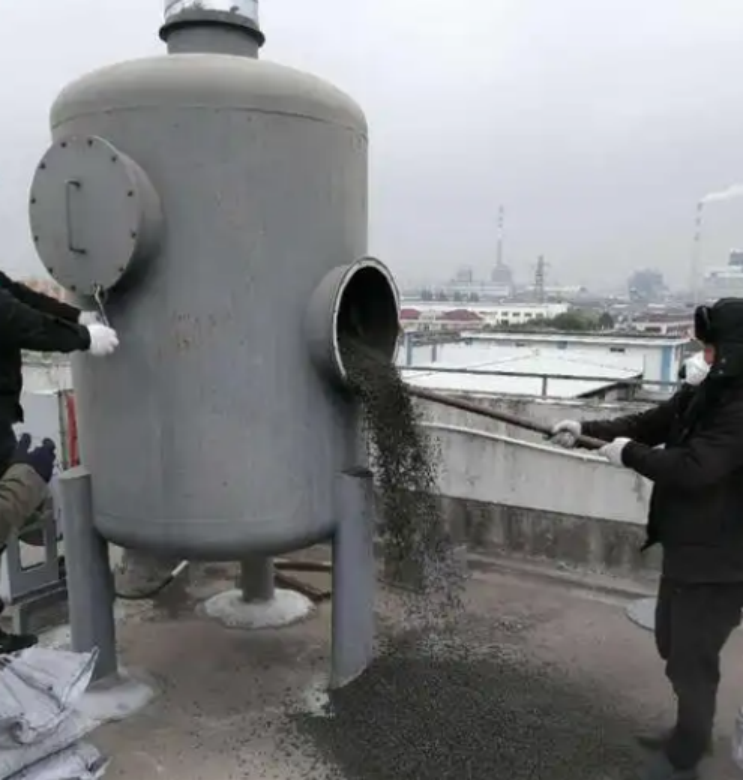
Key points for long-term maintenance
Regular inspection: monitor the pressure drop of the desulfurization tower and the color change of activated carbon (from khaki to gray-black when it fails), and regenerate or replace it in time10.
Waste treatment: Activated carbon saturated with adsorption is a hazardous waste and needs to be labeled, classified, stored and handed over to professional institutions for disposal.
Create leading brand of China foreign trade internet marketing outsourcing service
 FAX
FAX E-mail
 SKYPE
SKYPE Whatsapp